Water is something we use dozens of times a day without giving it much thought. We drink it, cook with it, shower in it, wash clothes with it, and run it through appliances. So when the water quality changes—or simply isn’t as good as we’d like—it can affect much more than the taste of a glass of water.
Cloudy dishes, mineral buildup, unpleasant odors, dry-feeling skin, and stains around faucets can all be signs that something deserves a closer look. The tricky part is figuring out what the problem actually is before choosing a solution.
That’s where testing, proper equipment, and a little professional guidance can make a real difference.
Start With a Water Test
Before investing in any type of water treatment, it’s smart to understand what’s in your water.
Water from a municipal supply may have different characteristics than water from a private well. Hardness, sediment, minerals, chlorine, pH, and other factors can vary considerably depending on the source and location.
A water test can provide a clearer picture of what’s happening. Instead of guessing whether you need a softener, filter, reverse osmosis system, or something else entirely, you can choose equipment based on actual results.
It sounds simple, but it’s an important step that homeowners sometimes skip.
Why Water Quality Matters Around the House
Good water quality isn’t only about having water that looks clear.
Hard water, for example, can leave calcium and magnesium deposits on faucets, shower doors, and appliances. Sediment can affect fixtures and equipment, while certain substances can influence taste or odor.
Over time, these issues may become more than a cosmetic nuisance. Mineral buildup can affect water-using appliances and make routine cleaning more frustrating.
And then there’s drinking water. Many homeowners naturally want water that tastes clean and fresh, particularly when they’re cooking or filling reusable bottles.
The treatment method should match the specific concern rather than attempting to solve every possible problem with one device.
One Solution Doesn’t Fit Every Home
There’s a common assumption that every house needs the same kind of filtration system. In reality, homes can have very different water conditions.
One property might mainly have hard water. Another might struggle with sediment. A household using well water could have an entirely different set of concerns.
This is why customized systems can be useful.
A tailored treatment setup can be designed around the home’s water chemistry, daily consumption, plumbing layout, and specific goals. Depending on the situation, it may combine filtration, softening, disinfection, or point-of-use treatment.
The advantage isn’t simply having more equipment. It’s having equipment that has a reason for being there.
Whole-House Treatment vs. Point-of-Use Treatment
Another important consideration is where treatment is actually needed.
A whole-house system treats water as it enters the property, allowing treated water to reach multiple fixtures. This can be useful when the concern affects the entire household supply.
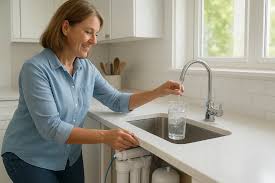
Point-of-use systems, on the other hand, focus on a particular location. A reverse osmosis system beneath a kitchen sink, for example, can provide treated water specifically for drinking and cooking without treating every gallon used throughout the home.
Neither approach is automatically better. It depends on the water problem and what you’re trying to accomplish.
Choosing Equipment Based on Your Needs
There are plenty of water-treatment products available today, and the variety can be overwhelming.
Activated carbon filters are commonly used to improve taste and odor and reduce certain substances. Water softeners are designed primarily to address hardness. Reverse osmosis systems can provide more intensive treatment for many dissolved substances.
There are also specialized systems for particular water conditions.
The important thing is not to choose equipment simply because it has the longest feature list. A system should be appropriate for the water entering your home and sized according to your household’s needs.
Installation Is Only Part of the Process
Even a high-quality treatment system can perform poorly if it isn’t installed correctly.
Plumbing connections need to be secure, flow rates should be considered, and some systems require drainage or specific operating conditions. Poor installation can lead to leaks, reduced performance, or unnecessary maintenance.
Professional installation can also help ensure that the system is configured correctly from the beginning.
Ask questions during installation. You should know what the system is designed to do, what maintenance it requires, and how often filters or other components need to be replaced.
Maintenance Keeps Treatment Working
Water-treatment equipment isn’t something you install and completely forget about.
Filters eventually become saturated. Softening systems require regeneration and routine attention. Reverse osmosis membranes have a limited service life. Other components may also require inspection or replacement.
Ignoring maintenance can reduce the system’s effectiveness.
A simple maintenance calendar can help. Write down filter-change dates, service appointments, and other recommended tasks. It takes only a few minutes, and it can prevent the system from quietly becoming less effective over time.
Think About Long-Term Costs
The purchase price isn’t the whole story.
When comparing systems, consider replacement filters, salt or other consumables, electricity where applicable, professional servicing, and expected equipment life.
A slightly more expensive system may offer better long-term value if it requires less frequent maintenance or is better suited to your household’s water conditions.
On the other hand, installing equipment you don’t actually need is money wasted.
That’s another reason testing and customization are so valuable.
Better Water Doesn’t Have to Be Complicated
Water treatment can seem technical at first, but the basic idea is straightforward: find out what’s in the water, decide what you want to improve, and select a system designed for that purpose.
The best solution isn’t necessarily the biggest, newest, or most expensive equipment. It’s the setup that matches your home’s needs and can be maintained properly over time.
When you approach water treatment that way, you’re not simply buying a piece of plumbing equipment. You’re making a practical investment in cleaner-feeling water, better-performing fixtures, and a more comfortable home.
And honestly, that’s what good water treatment should be about in the first place.