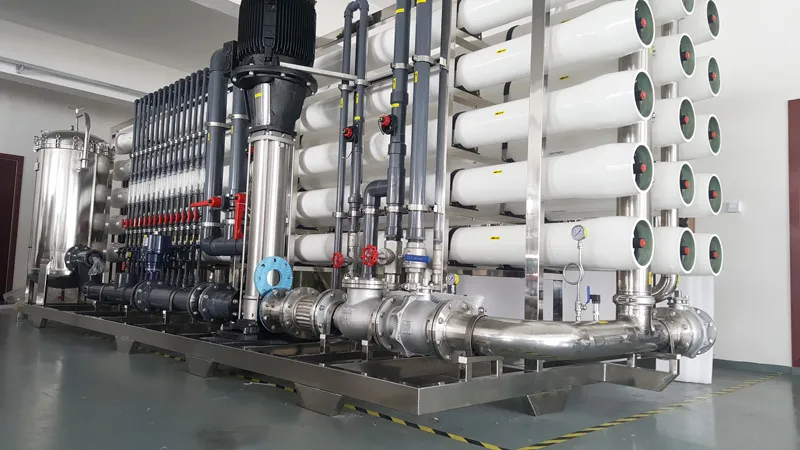
Water is easy to overlook in a busy business. It comes through pipes, runs equipment, fills tanks, cleans surfaces, and disappears down a drain. Unless something goes wrong, nobody gives it much thought.
But water quality can quietly influence operating expenses in ways that aren’t always obvious. Hardness can create scale inside equipment. Sediment can restrict components. Certain water conditions can affect production processes, cleaning routines, heating systems, and even the consistency of products.
For a commercial facility, these aren’t just minor annoyances. A small water-related problem repeated every day can become a surprisingly large expense over a year.
That’s why businesses are increasingly paying closer attention to water treatment and management. Not because every facility needs an elaborate system, but because the right approach can prevent avoidable headaches.
Start by Understanding Your Water
Before investing in treatment equipment, find out what you’re actually dealing with.
Commercial water may come from a municipal supply, private well, or another source. Its characteristics can vary depending on location, season, infrastructure, and source conditions.
Testing can reveal information about hardness, pH, sediment, chlorine, iron, dissolved solids, and other water-quality characteristics.
This step is easy to skip because it doesn’t feel particularly exciting. Still, it can prevent an expensive mistake.
A restaurant doesn’t necessarily need the same treatment as a laboratory. A hotel has different requirements from a manufacturing plant. The water problem should determine the treatment strategy — not the other way around.
Hard Water Can Create Hidden Expenses
Hard water contains minerals such as calcium and magnesium. In a home, the result may be annoying white spots around the faucet. In a commercial facility, the consequences can be much larger.
Think about a busy restaurant with coffee machines, dishwashers, water heaters, steam equipment, and ice machines running throughout the day. Mineral deposits can accumulate inside equipment and create additional cleaning and maintenance requirements.
Over time, those small tasks can add up.
That’s where water softening may become useful. By reducing hardness minerals, an appropriately sized system can help control scale and protect equipment that regularly uses or heats water.
The goal isn’t to make water “perfect.” It’s to reduce a problem that is costing the business time and money.
Equipment Maintenance Deserves a Closer Look
Commercial equipment is expensive, and replacing it isn’t something most businesses want to do ahead of schedule.
Mineral scale, sediment, and other water-quality issues can contribute to equipment problems depending on the application. Keeping those issues under control may reduce unnecessary service calls.
Of course, water treatment isn’t a guarantee against breakdowns. Machines still age, components still wear, and maintenance is still necessary.
But a thoughtful treatment strategy can potentially help reduce maintenance costs by limiting certain water-related issues.
That matters especially in facilities where downtime is expensive. A restaurant can’t easily afford a coffee machine to fail during the morning rush, and a production facility may lose far more than the repair bill when equipment stops unexpectedly.
Efficiency Isn’t Just About Electricity
When people hear “efficiency,” they often think about power consumption.
Water efficiency can involve much more than that.
It may include reducing wasted water, minimizing chemical use, improving equipment performance, reducing unnecessary cleaning, or using treatment equipment that operates according to actual demand.
For example, a properly maintained water heater with less scale may transfer heat more effectively than one heavily coated with mineral deposits. The real-world outcome depends on the equipment and water conditions, but avoiding unnecessary buildup is generally a sensible maintenance strategy.
Small improvements across a large facility can become meaningful over time.
Compliance Should Be Part of the Conversation
Businesses that use water in food preparation, healthcare, manufacturing, laboratories, or other regulated settings may have specific requirements to meet.
Those requirements vary by industry and location, so companies shouldn’t rely on generic advice when making compliance decisions.
Water treatment may be one part of a broader quality-control program, and proper documentation can be important.
Paying attention to regulatory compliance isn’t simply about avoiding penalties. It can also help establish consistent operating procedures and demonstrate that the business is taking water quality seriously.
When regulations apply, work with qualified professionals and check the requirements relevant to your specific operation.
Don’t Choose Equipment Based on Size Alone
Bigger isn’t automatically better.
A treatment system should be sized according to water quality, flow requirements, daily consumption, peak demand, and the intended application.
Imagine a facility that uses modest amounts of water most of the day but experiences heavy demand for a few hours. Average daily usage alone wouldn’t tell the whole story.
Peak flow matters.
An undersized system may struggle to keep up. An oversized system can cost more than necessary and may not provide meaningful additional value.
Good system design balances performance and practicality.
Filtration, Softening, and Reverse Osmosis Have Different Jobs
One of the easiest ways to overspend is to assume that every water treatment technology does the same thing.
It doesn’t.
Softening primarily addresses hardness minerals. Sediment filtration removes physical particles. Activated carbon can improve taste and reduce certain substances. Reverse osmosis can reduce many dissolved materials.
Some commercial facilities use multiple treatment stages because their water requires different types of treatment at different points.
But not every business needs all of them.
Start with testing and the actual application. Then select the technology that addresses the specific concern.
Maintenance Planning Matters as Much as Installation
Even excellent treatment equipment requires attention.
Filters need changing. Softener systems require salt or other regenerants. Reverse osmosis membranes eventually need replacement. Pumps, valves, tanks, and controls may need inspection.
Before purchasing, ask about the maintenance schedule.
Find out who performs service, how quickly replacement parts can be obtained, and whether routine maintenance can be scheduled outside business hours.
For a commercial operation, a treatment system that is difficult to service can become a problem of its own.
Calculate the Total Cost
The initial equipment price is only part of the calculation.
Businesses should consider installation, energy use, water consumption, replacement filters, resin or salt, servicing, and potential downtime.
A system that costs slightly more upfront may provide better value if it requires less frequent maintenance or reduces operating waste.
This broader view is where cost savings & efficiency become meaningful. Instead of asking only how much equipment costs today, ask what it will cost to own and operate over several years.
That calculation gives decision-makers a much clearer picture.
Train the People Who Use the System
Even a well-designed system can underperform if nobody knows how to operate it.
Staff should understand basic operating procedures, warning indicators, maintenance schedules, and what to do if water quality changes.
Keep simple records of filter replacements, service visits, water testing, and unusual readings.
It doesn’t need to become a mountain of paperwork. A straightforward maintenance log can make troubleshooting much easier.
And if employees know what “normal” looks like, they’re more likely to notice when something isn’t.
A Practical Approach Usually Wins
Commercial water treatment doesn’t have to be complicated.
The smartest systems are often the ones that solve a clearly defined problem without adding unnecessary complexity.
Test the water. Understand your process. Identify where water quality is creating costs or operational challenges. Size the equipment properly. Plan maintenance from day one.
Then review the results periodically.
Maybe you’re using less cleaning chemicals. Perhaps equipment requires fewer service calls. Maybe water quality has become more consistent.
Those are the improvements worth measuring.
Water Management Is a Long-Term Decision
Good water management isn’t about buying the most advanced equipment available. It’s about making a sensible investment based on real operating conditions.
When water quality is ignored, small problems can quietly turn into maintenance bills, downtime, wasted resources, and operational frustration.
When it’s managed properly, the opposite can happen.
Equipment can be easier to maintain. Processes may become more consistent. Staff spend less time dealing with avoidable water-related issues, and the business has better control over an often-overlooked part of its infrastructure.
The best result is almost boring — and that’s a good thing.
Water treatment should work quietly in the background, supporting the business rather than demanding attention every week. When it does, you’re not just treating water. You’re making the whole operation a little more predictable.