Water plays a bigger role in business than many people realize. In an office, restaurant, hotel, healthcare facility, manufacturing space, or retail building, water is often being used from morning until evening. It’s part of cleaning, food preparation, equipment operation, employee comfort, and sometimes the actual service being provided to customers.
When water quality becomes a problem, it rarely stays in one place.
Mineral buildup can affect equipment. Unpleasant taste or odor can become a concern for customers and employees. Scale can create extra maintenance work, while poor treatment choices may lead to unnecessary operating costs. That’s why commercial properties need to think about water differently from a typical household.
Commercial Water Needs Are Different
A small home might use a few hundred gallons of water in a day. A busy commercial facility can use considerably more, depending on its size and purpose.
Restaurants, hotels, laundries, offices, and industrial facilities all have their own water demands. A restaurant may rely heavily on water for cooking, dishwashing, ice production, and cleaning. A hotel has guest rooms, laundry facilities, kitchens, and other areas using water throughout the day.
This is where commercial water treatment becomes important.
The goal isn’t simply to make water “better.” It’s about selecting a treatment approach that fits the property’s usage, equipment, water source, and operational requirements.
Start With the Actual Water Problem
One of the biggest mistakes businesses can make is choosing treatment equipment before understanding the water condition.
Water can contain hardness minerals, sediment, or other characteristics that affect how it behaves inside a commercial facility. Some problems are obvious, while others only become noticeable when equipment begins requiring more frequent maintenance.
Testing the water can provide a useful starting point.
Instead of guessing, businesses can learn more about what they’re dealing with and then consider treatment options based on actual information.
That approach may sound slower at first, but it can prevent an expensive mistake later.
Hard Water Can Create Ongoing Costs
Hard water is a particularly common concern in commercial environments.
Calcium and magnesium can contribute to scale buildup inside plumbing and equipment. Over time, that scale may become more than a cosmetic issue. It can interfere with the performance of water heaters, dishwashers, boilers, and other equipment that regularly comes into contact with water.
For facilities where equipment operates constantly, those problems can become expensive.
commercial water softeners are designed specifically to address hardness and can be an important part of a commercial water-management strategy when testing shows that hardness is a concern.
The right equipment still needs to be properly sized, though. A system designed for a small property may struggle to keep up with the demand of a busy commercial facility.
Think About Flow Rates and Usage
Commercial water treatment isn’t just about how much water is used. It’s also about when the water is being used.
A restaurant might experience heavy demand during lunch and dinner. A hotel may have periods when many guests are showering at roughly the same time. An industrial facility can have its own peaks based on production schedules.
That means flow rate matters.
Treatment equipment needs to handle the expected demand without creating unnecessary pressure or performance problems. This is one area where professional system design can make a real difference.
A system that works perfectly in a low-demand environment may not be suitable for a property where several fixtures operate simultaneously.
Drinking Water May Need Specialized Treatment
Not every commercial facility needs the same type of drinking-water system.
Offices may want better-tasting water for employees. Restaurants may need treated water for food preparation. Hotels may want to improve the water available to guests.
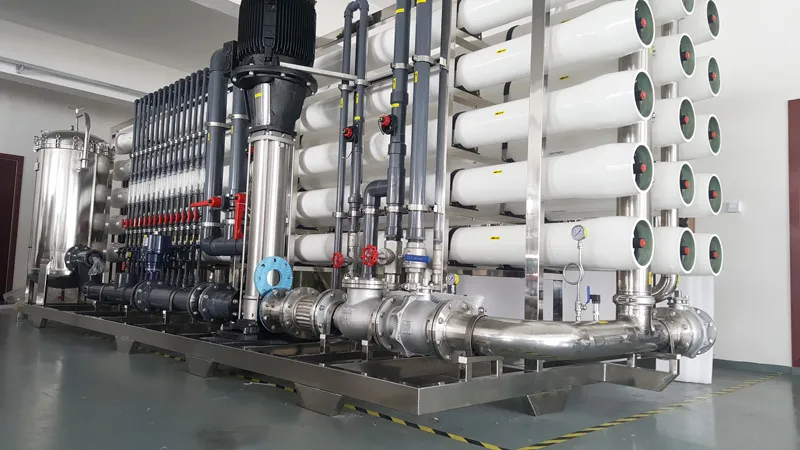
In situations where more advanced drinking-water treatment is appropriate, commercial reverse osmosis can be considered.
Reverse osmosis uses a membrane-based process to reduce certain dissolved substances from water. The technology can be useful for specific applications, but it isn’t automatically the right solution for every business.
Water testing and the intended use should guide the decision.
There’s little value in installing advanced equipment simply because it sounds impressive if a simpler system would accomplish the same goal.
Equipment Protection Should Be Part of the Conversation
Businesses often focus on the quality of water people consume, but equipment deserves attention too.
Commercial appliances and machinery can be expensive investments. Dishwashers, coffee equipment, ice machines, water heaters, boilers, and other systems may all depend on consistent water conditions.
Hardness and other water characteristics can contribute to maintenance concerns over time.
Treating the water doesn’t guarantee that equipment will never need repairs, of course. But an appropriate treatment strategy can be one part of a broader maintenance plan.
It’s about being proactive instead of waiting for a problem to become expensive.
Restaurants Have Especially Specific Needs
Food-service businesses often have complicated water requirements.
Water may be used for cooking, cleaning, ice production, beverage preparation, dishwashing, and employee use. Different applications can have different priorities.
For example, water used in an ice machine may need a different treatment approach from water used for general cleaning.
This is why restaurant owners should think beyond installing one filter and calling the job finished.
A properly designed system can take the property’s various water uses into account and provide treatment where it makes the most sense.
Hotels Need Reliable Water Across the Property
Hotels face another challenge: consistency.
Guests expect the water in their rooms to work properly. They don’t want strange odors, poor taste, or visible mineral deposits. At the same time, hotel management has to consider laundry, kitchens, housekeeping, and mechanical equipment.
Because so many systems depend on water, an issue in one part of the property can sometimes create a much larger operational headache.
Regular testing and maintenance can help identify changes before they turn into major disruptions.
Maintenance Should Never Be an Afterthought
Commercial treatment systems generally require more planning than residential equipment.
Filters need to be replaced. Components may need inspection. Softening systems require appropriate servicing, and reverse osmosis equipment can need membrane and filter maintenance.
A business should know who is responsible for these tasks and how often they need to be performed.
Waiting until equipment stops working isn’t a maintenance strategy.
A scheduled service plan can make things easier because treatment equipment gets attention before small issues become larger ones.
Consider the Cost of Downtime
For a business, water problems aren’t always just about repair bills.
Downtime can affect employees, customers, production schedules, and revenue.
If an important piece of equipment can’t operate because of a water-related issue, the financial impact may go far beyond the cost of the equipment repair itself.
This is why preventative water treatment can make financial sense for certain commercial properties.
The objective isn’t to spend money on equipment simply for the sake of prevention. It’s to identify realistic risks and decide whether reducing those risks is worth the investment.
Choosing a Commercial Treatment Partner
Businesses should look beyond the equipment itself.
Ask about system sizing, installation, maintenance, replacement parts, service availability, and expected operating costs. A good provider should be able to explain why a particular system is being recommended.
Don’t be afraid to ask for a straightforward explanation.
You should understand what the equipment does, what it doesn’t do, and what will be required to keep it operating properly.
A Smarter Approach to Commercial Water Management
Commercial water treatment is ultimately about reliability.
The right system can help a business manage water-quality concerns while supporting equipment performance, maintenance planning, and day-to-day operations.
But there isn’t one universal solution.
A restaurant, hotel, office, and manufacturing facility can have completely different needs. Water testing, usage patterns, flow requirements, equipment, and budget should all be considered before a system is selected.
The smartest approach is to start with the problem rather than the product.
Understand the water. Understand the business. Then choose treatment equipment that fits both.
When everything is designed properly and maintained consistently, water treatment becomes something a business can rely on quietly in the background. And for a busy commercial property, that’s exactly what you want—fewer surprises, better planning, and water systems that simply do their job day after day.